

What Would Make Outsiders Shine? Examining the Strengths of Limited Formats in Flesh and Blood.
Outsiders is releasing soon and with it will come a new experience for Flesh and Blood limited play. Sealed deck (where you get six booster packs to yourself to build a deck) and draft (where you pick a card from a pack and pass it along to build your deck) formats will be returning to local game stores. Currently, I feel there is a drought of limited events for Flesh and Blood, particularly at the local level. This may be somewhat due to availability of the sets that players actually want to draft. In the year and a half since Tales of Aria was released, there have been only two draftable sets, players may be feeling a lack of options about draftable sets. Either way, I hope Outsiders revitalizes interest in limited formats at local shops. The best way for this to happen is if Outsiders is a limited play experience that is both accessible and replayable. Legend Story Studios have mentioned the similarities between Outsiders and Welcome to Rathe, citing “all-melee combat” among other factors. This article seeks to run through the highs and lows of limited FaB so far and pull out some elements that I would like to see return in Outsiders. Given that LSS has associated Outsiders limited with Welcome to Rathe limited, that is where I will be drawing my initial comparisons. Next week, part two of this article will examine what we know about Outsiders so far and how that will impact limited play, as well as some pitfalls of past sets that I would like to see avoided.
![Sink Below (Red) [WTR215] Unlimited Normal](https://cdn.shopify.com/s/files/1/0261/2710/6097/products/aa2a68c3-a44c-4d28-99e2-20b2f6e0db0a.png?v=1631307761)
Welcome to Rathe (WtR) is generally heralded as the pinnacle of limited FaB play for several reasons including balance, the different archetypes available, and the many ways that games could end. However, I have a sneaking suspicion that Welcome to Rathe has the best draft and sealed experience mainly due to the fact that it had more testing time available to it. WtR features the highest amount of back-and-forth of any limited set in my opinion. There are relevant on-hit effects from every hero, and a reaction step that sees play on most turn cycles. Additionally, cards block well and there are rarely dead hands that can neither attack nor block. Evasion (presenting damage that is difficult to block, often to close out a game) is something that is integrated very well in the set through attack reactions, Dominate, and Intimidate. Each of these factors has a play and a counter-play (usually a defense reaction like Sink Below) associated with it. The nature of counter-play to this evasion, combined with the general strength of defense in the set, meant that many games allowed players to see every card in their deck and went to the second deck cycle.
This rewarded mid-game set-up and allowed long games to end in multiple different ways that weren’t fatigue. In a different set, we see the opposite end of the evasion spectrum with Lexi, who got no cards that allowed her to block any kind of evasive damage in Tales of Aria. She has no access to cards that can play around Dominate, which Oldhim and other Lexis have easy access to, or arcane damage, which Briar has easy access to. Meanwhile, Both Oldhim and Briar have access to multiple cards each (Sigil of Suffering, Summerwood Shelter, and Turn Timber) that let them efficiently overcome Lexi’s Dominated damage and effects. This was never a good feeling to face as a Lexi player, as that Dominated damage is your only out to win games since both other heroes have a weapon or recycling Earth cards that can easily fatigue a Bow user.
![Summerwood Shelter (Red) [U-ELE125] Unlimited Normal | Red Riot Games CA](https://cdn.shopify.com/s/files/1/0261/2710/6097/products/f6de2469c2eb499744280ed21a94d823_a23769a0-c74b-4aae-8104-66e8d6c6b51d.png?v=1637169140)
![Sigil of Suffering (Red) [U-ELE227] Unlimited Normal | Red Riot Games CA](https://cdn.shopify.com/s/files/1/0261/2710/6097/products/7c93f095516ca18c463ec05d33c61e1c_5757cdc3-03d4-463e-b9dc-9c12670894ba.png?v=1637169092)
Another strength of WtR was that it had only one type of damage, which allowed the back-and-forth of the set to remain focussed and lowered the burden of sideboard pressure. You didn’t need to draft potentially irrelevant Arcane Barrier or Spellvoid, or add often-but-not-always-lackluster life gain cards like Rejuvenate to counter typeless, unblockable damage. This, combined with 15 cards per pack allowed for draft and sealed decks to have proactive sideboard options available. I prefer the feeling of making a lot of small decisions with my sideboard that pay off incrementally rather than having my entire sideboard dedicated to cards necessary for survival. The feeling of agency makes things more satisfying, even if it is small. I will add that the arcane damage present in Monarch was usually a happy medium since it was uncommon and most heroes would draft Spellvoid equipment incidentally anyways.
![Nullrune Hood [ARC155] Unlimited Normal | Red Riot Games CA](https://cdn.shopify.com/s/files/1/0261/2710/6097/products/f0ae9ccf-9a26-4fb9-b7be-c505849944b4.png?v=1631306765)
![Rejuvenate (Red) [U-ELE106] Unlimited Normal | Red Riot Games CA](https://cdn.shopify.com/s/files/1/0261/2710/6097/products/58971784ad96ca4da255ceb5f6266135_08f3c973-ef53-4748-af10-ed3909771800.png?v=1637169051)
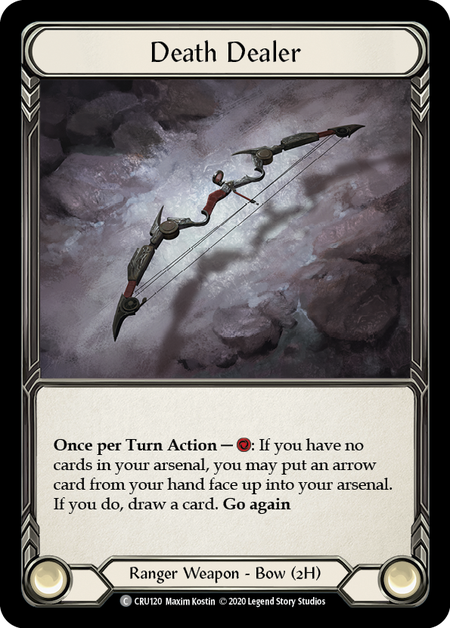
Welcome to Rathe also had some of the strongest standalone token weapons we have seen so far. Each hero feels like they can play with just their weapon in a pinch, again reducing the number of situations where players feel as if they can’t do anything. Looking at Outsiders, I am curious to see if there will be a return of Harmonized Kodachi (a very strong weapon that could compete with Dawnblade and Anothos) beside Bows that cannot attack and are often prone to fatigue.
![Harmonized Kodachi [CRU049] Unlimited Normal | Red Riot Games CA](https://cdn.shopify.com/s/files/1/0261/2710/6097/products/0aba2cf5-ff3c-5224-9baf-aeeb93638147_584a8b78-ac93-432e-b306-aaf73df4c04f.png?v=1631227501)
![Induction Chamber [1HP189] | Red Riot Games CA](https://cdn.shopify.com/s/files/1/0261/2710/6097/products/eb42f71b-34ba-5013-8b29-84739619660f_4bc656da-8a27-4223-a381-3c2863f0d88d.png?v=1652107068)
![Nebula Blade [1HP260] | Red Riot Games CA](https://cdn.shopify.com/s/files/1/0261/2710/6097/products/320cc490-3481-56bb-8a87-089bdc429c89_727c1fb4-fc1a-4aa5-8d3f-45eeb793dde4.png?v=1652107085)
An imbalance in the power of weapons can lead to some issues, as we can see when Induction Chamber blows an Arcane Rising limited game out of the water as it makes Teklo Plasma Pistol the strongest weapon in the format. Even in Arcane Rising sealed the fact that Nebula Blade could reliably swing for four damage led to the predominant strategy being to run as many cards as possible in Viserai to aim for fatigue.
![Pummel (Red) [WTR206] Unlimited Normal | Red Riot Games CA](https://cdn.shopify.com/s/files/1/0261/2710/6097/products/970f246c-3cfc-48c4-9087-9cf0ceb51fb1.png?v=1631307650)
![Sift (Red) [UPR197] (Uprising) Rainbow Foil | Red Riot Games CA](https://cdn.shopify.com/s/files/1/0261/2710/6097/products/e20bba38-72a9-5956-a1a3-de3460db2865_073248ef-989e-4a86-8e70-c73ddf10bf35.png?v=1658419174)
Along with strong weapons, WtR has consistently strong Generic cards. In lieu of Sift and Strategic Planning, you are offered Snatch and Pummel. I think that strong Generic cards are something that we will see the return of in the first limited set without Talents in two years. Maybe we’ll even see some key cards be reprinted, like how Scar for a Scar was in Uprising. This offers a lot of options in the drafting experience, as players can wait for longer before committing to their chosen class or hero. This allows for the gathering of information about which cards you can expect to flow downstream. In contrast, sets with weak Generic cards, like Uprising, incentivized players to commit to a decision before there was a lot of information available. This often led to awkward draft pods with too many people playing one hero or some people forced to play with a weak deck due to a mid-draft pivot.
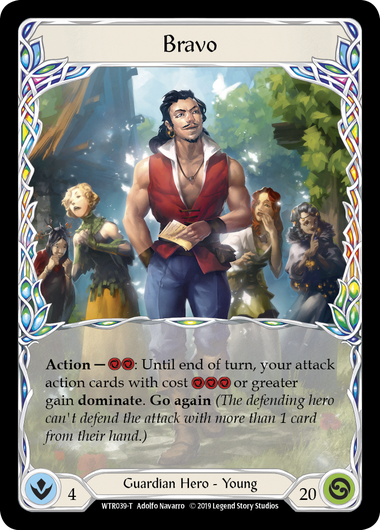
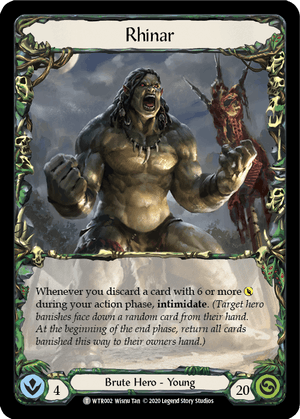
Additionally, strong Generic cards provide more sealed deckbuilding options since they reduce the number of good class cards required to build any given deck. In addition to Generic cards, Welcome to Rathe also features hero abilities that function with Generic cards. Bravo can dominate any three-cost attack, not just Guardian attacks. Katsu and Rhinar can discard Generic zero-cost or six-power cards for their abilities. This removes a portion of the disincentive that drafting Generic cards usually carries.

Providing options in the drafting experience is a key to a satisfying and accessible draft. I think Monarch was the best draft set for providing these drafting options. The four heroes available led to a balanced split, with two of each hero at an eight-person table. This is in contrast to more recent sets where three heroes lead to an often-challenging guessing game of which hero is over- or under-represented at the table, or what the “default” balance should be (such as the theory that an Uprising draft should usually have four Fai players). Picking cards in Monarch as they were passed around felt profoundly balanced, as each hero had three clear vectors to work off of. The set offers class cards, which are functionally exclusive to each of the four heroes in the set, talent cards, which are shared with another hero, and Generic cards that care about the base power of attacks, which are generally shared with another hero that you do not share a talent with. For example, Boltyn can choose from Warrior cards, Light cards, or Generic cards that focus on low base power. These include low-base-power attacks such as Belittle, and the Generic tools that increase their power, such as Minnowism and Stubby Hammerers, which enable his ability. Meanwhile, Chane can draft Runeblade cards and Shadow cards, neither of which Boltyn has any interest in.
![MON] - Boltyn - Light Warrior Hero - Young : r/FABTCG](https://preview.redd.it/yfpzir6sm2u61.png?auto=webp&s=04f60c300e1b1bfa926225f8a65522db2461ecbc)
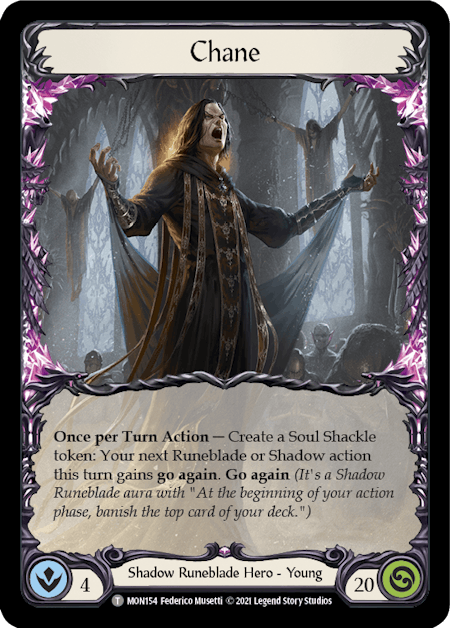
However, Chane is still usually competing with Boltyn to draft those low base power attacks and the actions which buff them, since that plays well with his ability and Runeblade cards as a whole. In addition to creating additional draft tension without creating a feast or famine scenario, these three vectors allowed Monarch draft decks to feel more complete than many other sets, even in the unlikely scenario where you need a Cracked Bauble. I’m optimistic that Outsiders will aim to match this three-draft-vector system by utilizing the two available heroes per class and the dual-class cards, but we’ll have to wait to find out.
![Bolt of Courage (Red) [U-MON042] Unlimited Normal | Red Riot Games CA](https://cdn.shopify.com/s/files/1/0261/2710/6097/products/2f177981-3161-543f-b4bd-818f6dea5101_0a3733ee-f3f8-42c5-98ea-b000720b2ca3.png?v=1631307347)
![Minnowism (Red) [U-MON296] Unlimited Normal | Red Riot Games CA](https://cdn.shopify.com/s/files/1/0261/2710/6097/products/6b5b44a6-82c3-5535-add5-c3da681286f8_2077527d-0e13-41c1-a07e-39c59849a2d7.png?v=1631307455)
![Bounding Demigon (Red) [U-MON168] Unlimited Normal | Red Riot Games CA](https://cdn.shopify.com/s/files/1/0261/2710/6097/products/111fd874-7842-5877-8cdd-da796c6a9cfb_f3378d59-5801-4d95-8ea5-f8739fa3b786.png?v=1631307399)
Something else I would love to see is a re-emergence of a balanced sealed experience. In Uprising sealed, it is nearly always correct to play Fai. While some sets of six packs will allow for a few Iyslanders if they get lucky, Fai is so often the strongest default choice regardless. The doubled prevalence of six-power attacks to trigger Phantasm between draft and sealed formats makes Dromai much more difficult to play. This feels like it removes a key element of building your sealed deck and making the right choices. In the admittedly few times I have played Uprising sealed, I worked so hard to try and put together a good Iyslander and Dromai deck. I even got lucky a couple of times and got what I considered to be a very fortunate pool for Dromai or Iyslander. But at the end of the day, the mediocre Fai deck that I had access to ended up being a better option in both instances. In contrast, I think that WtR had the best sealed experience because it was the most balanced and highlighted the fundamentals of deckbuilding in FaB. It wasn’t the most mechanically interesting, and there were not cool tricks like using instant-speed blue Strategic Planning as Iyslander to respond to and deny Fai’s Pheonix Flame ability. But I think that fundamentals are what make sealed an enjoyable experience, and WtR really nailed that. It certainly wasn’t perfect, as Bravo was a strong default option because he had the strongest fatigue plan if you saw an otherwise-lackluster pool of cards, but it was the best we’ve seen so far. I hope Outsiders returns to focusing on that fundamental deck building experience, and I’m curious to see how the variance in available weapons in the set impacts that.
![Strategic Planning (Red) [UPR200] (Uprising) | Red Riot Games CA](https://cdn.shopify.com/s/files/1/0261/2710/6097/products/7008ae4a-5baa-5e89-958a-00cbb95ad8dd_4aaf413e-c224-475d-9914-561991b2cc2f.png?v=1658419262)
![Phoenix Flame [LGS104] (Promo) Rainbow Foil | Red Riot Games CA](https://cdn.shopify.com/s/files/1/0261/2710/6097/products/6bc5ded9-b568-5ec7-b6e1-86b3d51dc588.png?v=1674231861)
The recent organised play announcement includes two Callings, neither of which feature draft or sealed formats in the main event. There was also a noticeable shortage of sealed and draft Callings for the most recent core set of Uprising. Perhaps LSS are moving away from solely-limited premier-level events. This may be due to a challenge in running a draft format for so many players simultaneously and the seemingly perpetually-present swinginess of sealed FaB events (which has only become more pronounced with each set). Maybe we take this as an indication that LSS have not solved the issues with sealed deck play. Maybe I’m reading into this too much as I extrapolate based on a small amount of information in anticipation of a new set.
Come back next week for a more specific analysis of how Outsiders limited formats could shape up given what we know about the set so far. As a final note, I just want to say the strengths or weaknesses of the sets mentioned in this article are not necessarily exclusive to the set mentioned. For example, I mentioned that WtR had a very strong element of second-cycle gameplay but it is not the only set to have this. Arcane Rising arguably rewards players even more for those same play patterns, and the concept is very present in Monarch as well. There are so many things to talk about with Flesh and Blood limited formats that even in the 2000 words of this article, there is still so much more to discuss and wish for in Outsiders.